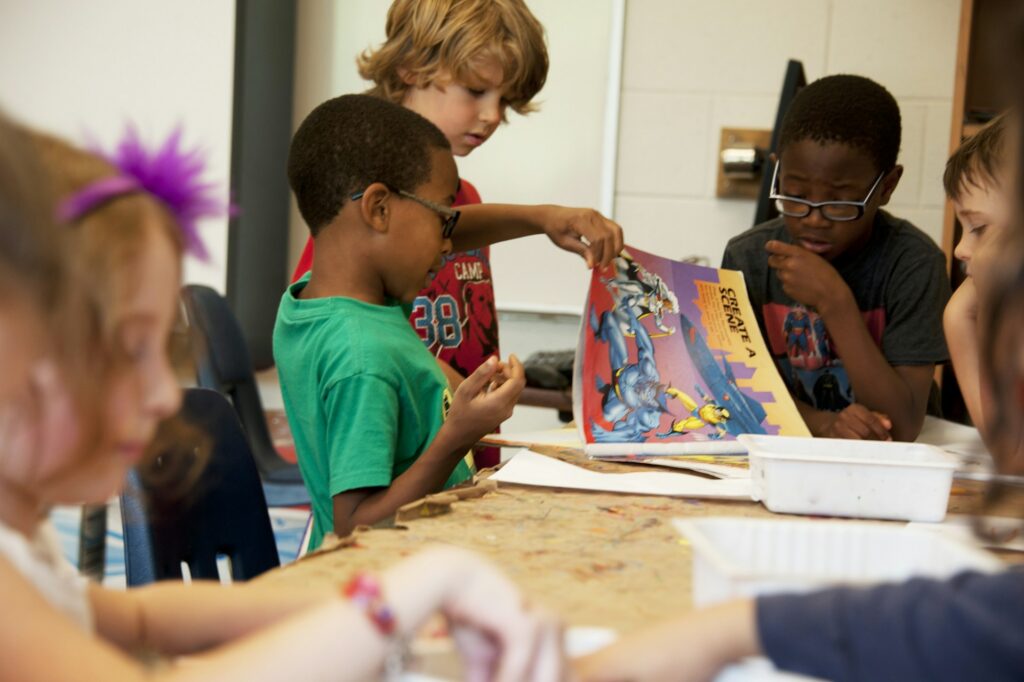
Public schools welcome every child who walks through the door. They serve children from all kinds of families, regardless of income, race, language, or ability. In the rural communities Together for Hope serves, the public school is often a center of community life: a gathering place on game nights, a polling place on election days, a source of breakfast and lunch for many children, and often one of the county’s largest employers.
For Christians, caring for these schools is part of caring for our neighbors.
“When Jesus told his disciples to let the children come to him, he did not ask which children.”
A faith that welcomes children
In Matthew 19, when the disciples tried to send children away, Jesus said, “Let the little children come to me, and do not hinder them.” When Jesus told his disciples to let the children come to him, he did not ask which children. A church that follows him will want every child to have the chance to learn, grow, and flourish.
The prophet Jeremiah told God’s people in exile to “seek the welfare of the city” where they lived, because in its welfare they would find their own (Jeremiah 29:7). The public school is one of the clearest places where the welfare of a whole community is at stake. When its children thrive, the whole community does better.
Baptists in particular have long supported public schools as places that serve every family without favoring any one faith. That commitment to religious liberty and to the common good belongs to the tradition Together for Hope grew from.
When zip code decides too much
In too many places, a child’s zip code shapes the quality of the education available to them. Schools in persistently rural, low-income counties often have smaller tax bases, struggle to recruit and retain teachers, and send children on long bus rides each day. These conditions stem from funding and policy decisions, and those decisions can change.
Teachers, bus drivers, cafeteria workers, and principals in these schools are some of their communities’ greatest assets. Many of them grew up in the same towns where they now teach. Supporting them is one of the most direct ways to support the children in their care.
What churches and neighbors can do
- Build a relationship with a nearby public school. Ask the principal and teachers what would help, and listen before offering a plan.
- Volunteer as a tutor, reading partner, or mentor.
- Support teachers with classroom supplies, meals during conference weeks, and thank-you notes.
- Pray for the students, families, and staff of local schools by name.
- Show up at school board meetings, and speak up for fair funding for rural schools.
Education is one of Together for Hope’s four Priorities of Hope, and coalition members across all four ethnogeographies are working alongside their local schools.
Together for Hope is also building its advocacy work, and coalition members’ voices can make a difference in education.
Every child in a county of persistent rural poverty deserves a good school. For people of faith, working toward that is one way of loving our neighbors.
Downloadable document: https://hope.cbf.net/wp-content/uploads/2020/10/Why-Christians-Care-About-Public-Education.pdf.